
Edinburgh School
Thomas Hardie
Edinburgh, 1803–1856
Thomas Hardie (1803-1856) was an Edinburgh-based violin maker, the son and pupil of Matthew Hardie. He worked independently from 1826, facing financial difficulties and collaborating with William Yoole. His instruments, mostly Stradivari-based, are noted for their beautiful workmanship, particularly his violas and cellos, though his practice of artificially seasoning wood often resulted in inferior tone. He is mentioned in Charles Reade's novel Christie Johnson and died after a fall, with sources providing conflicting death dates of 1856 or 1858.
Auction price history
Highest auction price
| Type | Details | Sold | Price |
|---|---|---|---|
| Violin | 35.9 cm Edinburgh, 1837 | October 2011 | £8,750 |
| Violin | 36.0 cm 1850 [Probably by] | December 2010 | £1,080 |
| Violin | 1854 | October 1997 | £575 |
| Violin | 1822 | November 1995 | £3,680 |
| Viola | 41.0 cm 1828 | November 1993 | £8,625 |
| Violin | 1840 c. | January 1989 | £1,100 |
| Violin | 1845 | September 1988 | £1,430 |
| Violin | 1852 | April 1984 | £1,980 |
| Viola | 41.3 cm 1847 | November 1982 | £2,090 |
| Viola | 41.3 cm 1838 | September 1981 | £1,760 |
| Violin | 1822 | March 1981 | £639 |
Maker Overview
Life
Thomas Hardie (1803-1856) was the son, pupil, and assistant of Matthew Hardie. He began working independently from 1826 at 15 Shakespeare Square, Edinburgh, and later from 1837 at 79 High Street, with various other addresses following. Like his father, he faced difficulties in maintaining a steady existence. Between 1847 and 1851, he received support from William Yoole, who provided his own workshop, leading to the recording of eleven collaborative instruments. He is thinly disguised as 'Thomas Harvie' in Charles Reade's novel Christie Johnson (1853). Sources contain conflicting information about his death date; John Dilworth and George Hart state he died in 1856, with Dilworth specifying after falling down stairs near his final residence at 5 Advocate's Close. William Meredith Morris, however, reports his death on January 19, 1858, due to an accident while intoxicated, and Willibald Leo Lütgendorff also attributes his death to a fall down stairs while drunk.
Characteristics
- Workmanship
- His work reflects that of his father, and the workmanship is described as beautiful and faultless by William Meredith Morris. Willibald Leo Lütgendorff notes that the execution and varnish are often better in his instruments compared to his father's.
- Models
- His instruments are mostly Stradivari-based, though at least one viola shows recognizably Guarnarian characteristics. He retained his father's model.
- Specific Instruments
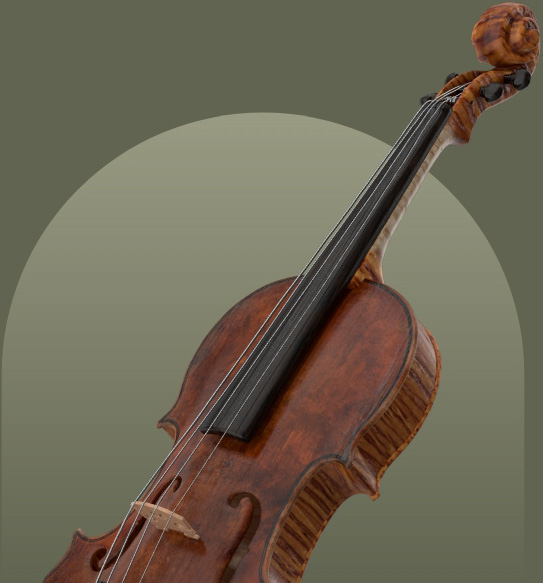
- Violas, mostly dating from 1828-1856, are considered very fine, as are the distinguished Lockey Hill-like cellos.
- Tone and Materials
- William Meredith Morris notes that despite beautiful workmanship, the tone of his violins was very inferior, attributing this to artificial seasoning of the wood. Willibald Leo Lütgendorff also states that he dried wood in a baking oven, causing his violins, which sounded good when new, to now have little tone.
- Labels
- Examples include 'Thomas Hardie / fecit Edinburgh / anno 1846', 'Thomas Hardie / fecit Edinburghie. Anno 1828 [Rattray]', and 'THOMAS HARDIE, FECIT, EDINBURGH, ANNO 1850'.
- Thomas Hardie
fecit Edinburgh
anno 1846John Dilworth - Thomas Hardie
fecit Edinburghie. Anno 1828John Dilworth
Influence and legacy
- Training: He was the son, pupil, and assistant of Matthew Hardie.
- Collaborations: He collaborated with William Yoole between 1847 and 1851, producing eleven recorded instruments together.
- Reputation: His work is highly regarded.
- Literary Portrayal: He appears thinly disguised as 'Thomas Harvie' in Charles Reade's novel Christie Johnson (1853).
- Critical Reception: His work received high praise from Charles Reade, though William Meredith Morris could not endorse Reade's sentiments regarding Thomas Hardie's tone, finding it inferior and comparing it to a common factory fiddle.
Biographies
The overview above is drawn from the following published accounts. Read them in the original:
John Dilworth+
HARDIE, Thomas Born 1803, died 1856 Edinburgh, Scotland UK. Son, pupil, and assistant of Matthew Hardie, above. Working independently from 1826 at 15 Shakespeare Square, Edinburgh, and from 1837 at 79 High Street; various other addresses followed. Like his father he had difficulties with maintaining a steady existence, and eventually died after falling down some stairs near his final residence at 5 Advocate’s Close. Between 1847 and 1851 he was supported by William Yoole, who made his own workshop available to him. Eleven instruments made by the two men in collaboration are recorded. He appears thinly disguised in an unflattering light as ‘Thomas Harvie’ in Charles Reade’s novel Christie Johnson (1853). His work reflects that of his father and is highly regarded. Mostly Stradivari based, there is also at least one viola showing recognisably Guarnarian characteristics. Violas, mostly dating from 1828-1856, are very fine, as are the distinguished Lockey Hill-like cellos. Thomas Hardie / fecit Edinburgh / anno 1846 Thomas Hardie / fecit Edinburghie. Anno 1828 [Rattray]
George Hart+
Worked with his father, Matthew Hardie. He was born in 1804, died 1856.
William Meredith Morris+
He was the son of the great Matt. Hardie, and possessed many of the fine qualities of his father. I have seen only three of his violins, in which the workmanship was beautiful, but the tone very inferior. There is not the slightest doubt that he artificially seasoned his wood, hence the immense disparity between the workmanship and the tone. His work has received high praise from no less an authority than the late Charles Reade, but I cannot endorse any of the sentiments of the great connoisseur as regards Thomas Hardie’s tone. I have heard better in many a common factory fiddle. The workmanship may be faultless, but if the “vital spark” — the tone — be vile, the instrument deserves any name but that of ” violin.” Hardie had many rare gifts, but self-restraint does not appear amongst them. He met with his death through an accident, Jan. 19, 1858, whilst in a state of intoxication. Label : —
THOMAS HARDIE, FECIT, EDINBURGH, ANNO 1850
Willibald Leo Lütgendorff+
Sohn und Schüler von Matthew H., dessen Modell er beibehielt, doch ist
die Durchführung und der Lack oft besser bei ihm; leider aber trocknete er das
Holz im Backofen, so dass seine Geigen, die neu recht gut klangen, jetzt wenig
Ton haben. Er war sehr talentvoll, ergab sich aber dem Trunk, und sein Tod
war die Folge eines Sturzes über die Treppe seines Hauses, als er wieder betrunken
war.
Sell your instrument with Amati
Get started by uploading photos of your instrument for our experts to review.
Sell your instrument with Amati
Get started by uploading photos of your instrument for our experts to review.
Pupils
Alexander Millar Pupil
Working in Edinburgh at the same time
Daniel Dewar worked 1786–1825
David Stirrat worked 1811–1826
George Ferguson worked 1825–1835
James (I) Hardie worked 1830–1856
James (II) Hardie 1836–1916
John Macrae worked 1850
John Mcgeorge b. 1808
Matthew Hardie 1755–1826