Edinburgh School
David Stirrat
Edinburgh, b. 1768
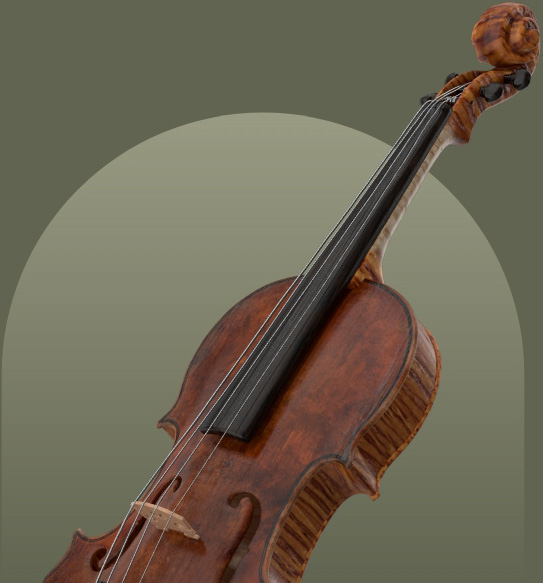
David Stirrat (1768-1826) was a Scottish violin maker who worked in Edinburgh from 1811, having previously lived in Glasgow. A student of Matthew Hardie, his instruments are noted for their characterful work on Stradivari models, distinctive scrolls, and a rich varnish, though sources conflict on its color. Despite his early death, his work was considered of good quality, and he was believed to have the potential to surpass his teacher.
Auction price history
Highest auction price
8 results
| Type | Details | Auction house | Sold | Price |
|---|---|---|---|---|
| Cello | 75.4 cm Edinburgh, 1826 | — | October 2008 | £4,338 |
| Violin | 1810 c. Probably by | — | November 2005 | £1,680 |
| Violin | 1811 | — | June 2001 | £1,200 |
| Violin | 1814 | — | October 1995 | £5,520 |
| Violin | 1815 c. | — | October 1994 | £1,725 |
| Violin | 1812 | — | June 1990 | £2,640 |
| Violin | 1814 | — | April 1985 | £2,200 |
| Violin | 1819 | — | June 1983 | £825 |
No results match those filters.
Maker Overview
Life
David Stirrat (1768-1826) was born in Ayrshire in 1768. He lived in Glasgow from 1794 until 1811, establishing himself as a violin maker in Edinburgh from 1811. His workshop was initially located at 210 High Street, moving to the Head of Fleshmarket Close from 1816, and then to 105 High Street from 1823. William Meredith Morris notes that Stirrat died at an early age, a sentiment, who believed Stirrat would have surpassed his teacher had he not died prematurely. Sources indicate his working period in Edinburgh as 1811-1826 (Dilworth), 1810-1820 (Lütgendorff), and about 1810-1815 (Cecie Stainer). William Meredith Morris, despite never having seen an example of Stirrat's work, states that reliable accounts describe his instruments as genuine works of art, though few specimens likely remain due to his early death.
Characteristics
- Workmanship
- David Stirrat's instruments are characterized by their very characterful work on Stradivari models, featuring a good low arch.
- Scrolls
- The scrolls are described as slightly oval along the line of the pegbox, with the turns being a little cramped and lightly chamfered.
- Materials
- Materials used were generally quite plain.
- Varnish
- John Dilworth describes the varnish as quite rich textured and predominantly red-brown. However, Willibald Leo Lütgendorff mentions that Stirrat used a "gelben Spirituslack" (yellow spirit varnish), indicating conflicting information regarding the varnish color.
- Quality
- His instruments were considered good.
- D. Stirrat Fecit
Edinburgh 1810John Dilworth
Influence and legacy
- Mentorship: Willibald Leo Lütgendorff identifies David Stirrat as a student of Matthew Hardie, suggesting that Stirrat was a talented violin maker who would have surpassed his teacher if he had not died prematurely.
- Style: Stirrat's work strongly resembles Hardie's, yet it possesses many unique characteristics.
- Collaboration/Relationship: John Dilworth notes that at least one violin labeled by M. Hardie has been found signed internally by Stirrat, though nothing further is known about their specific relationship.
- Rarity: Due to his early death, William Meredith Morris suggests that only a few specimens of David Stirrat's work likely remain.
- Potential: Willibald Leo Lütgendorff believed that Stirrat had the talent to surpass his teacher, Matthew Hardie, had he lived longer.
Biographies
The overview above is drawn from the following published accounts. Read them in the original:
John Dilworth+
STIRRAT, David Born 1768 Ayrshire, Worked 1811-1826 Edinburgh, Scotland UK. Lived in Glasgow, 1794-1811. Established in Edinburgh as a violin maker from 1811. Workshop initially at 210 High Street, from 1816 at Head of Fleshmarket Close, and from 1823 at 105 High Street. Very characterful work on Stradivari models with good low arch. Scrolls slightly oval along the line of the pegbox and the turns a little cramped and lightly chamfered. Materials generally quite plain. Varnish quite rich textured and predominantly red-brown. At least one violin labelled by M. Hardie has been found signed internally by Stirrat, but nothing further is known of their relationship. Signed internally. D. Stirrat Fecit / Edinburgh 1810 [Rattray]
Cecie Stainer+
Was working in Edinburgh about 1810-15. His instruments were considered good. Label: ” D. Stirbat fecit Edinburgh, 1812.”
William Meredith Morris+
I have never had the good fortune to see an example of this maker’s work. He died at an early age, and there are probably but few specimens remaining of what were according to reliable accounts genuine works of art.
Willibald Leo Lütgendorff+
Schüler von Matthew Hardie, ein talentvoller Geigenmacher, der sicher seinen Lehrmeister übertroffen hätte, wenn er nicht vorzeitig gestorben wäre. Seine Arbeit erinnert sehr an die Hardie’s, besitzt aber trotzdem viele eigene Züge. Er hatte einen gelben Spirituslack. Er lässt sich von 1810—1820 in Edinburgh nachweisen.
Sell your instrument with Amati
Get started by uploading photos of your instrument for our experts to review.
Sell your instrument with Amati
Get started by uploading photos of your instrument for our experts to review.