
Cremona School
Francesco Rugeri (Ruggieri)
Cremona, 1620–1698
Francesco RUGERI (RUGGIERI) (1620-1698) was a highly significant Cremona violin maker, celebrated for his prolific output of high-quality violins and particularly important cellos. While traditionally regarded as a pupil of Niccolò Amati, recent research suggests a more independent development, even proposing him as a potential early teacher of Stradivari. His instruments are characterized by fine workmanship, distinctive soundholes, graceful outlines, and a beautiful, transparent varnish. He was innovative in exploring the smaller cello model and is lauded for consistently achieving a noble, full, and beautiful tone in his instruments, which are often indistinguishable from Amati's work and highly valued today.
Auction price history
Highest auction price
| Type | Details | Sold | Price |
|---|---|---|---|
| Violin | Labelled Francesco Ruger detto il Per in Cremona dell'anno | March 2025 | £165,200 |
| Violin | Labelled Giacinto Ruggeri detto il Per in Cremona 1690 | March 2024 | £132,000 |
| Violin | 35.1 cm Cremona, 1670 c. | October 2010 | £118,918 |
| Violin | 34.4 cm Cremona, 1680 c. [Lit. & with Provenance] | April 2010 | £157,120 |
| Violin | 35.1 cm Cremona, early 18th C. [Probably by] | October 2008 | £6,250 |
| Violin | 34.8 cm (restorable condition) [Ascribed to] | May 2007 | £20,162 |
| Violin | 35.2 cm 1680 c. [Probably by] | November 2006 | £30,073 |
| Violin | 35.5 cm Cremona, 1700 c. | November 2006 | £13,200 |
| Violin | 35.5 cm Cremona, 1700 c. (table and scroll later) | November 2006 | £15,600 |
| Violin | 35.2 cm | October 2006 | £18,390 |
| Violin | 35.4 cm Cremona, 1700 c. | July 2006 | £31,200 |
| Violin | 34.3 cm Cremona, 1694 | May 2006 | £95,648 |
| Cello | 76.0 cm Cremona, 1687 (later head) | February 2006 | £98,400 |
| Violin | 1670 c. | May 2005 | £84,000 |
| Violin | Cremona, 1673 c. | October 2004 | £71,917 |
| Violin | Italy, c. 1700 [Attributed to] | March 2004 | £54,000 |
| Violin | 1685 | July 2003 | £100,800 |
| Violin | 1698 | November 2001 | £111,500 |
| Cello | 1685 | June 2001 | £117,000 |
| Violin | 1675 (composite) | June 2001 | £40,750 |
| Violin | 1697 | May 2001 | £158,042 |
| Violin | 34.4 cm 1694 | November 2000 | £52,250 |
| Violin | 1650 | March 2000 | £40,000 |
| Violin | 1660 c. | November 1998 | £90,600 |
| Violin | 1685 c. | March 1997 | £60,900 |
| Cello | 1706 | November 1996 | £115,000 |
| Cello | 1690 | June 1994 | £54,300 |
| Violin | 16-- | March 1990 | £49,500 |
| Cello | 1667 | November 1989 | £88,000 |
| Violin | 1677 | November 1989 | £71,500 |
| Violin | 1650-99 | November 1988 | £48,400 |
| Cello | 1684 | June 1988 | £44,000 |
| Violin | 1673 | March 1986 | £22,000 |
| Violin | 1690 c. | November 1984 | £33,000 |
| Violin | 1700 | June 1984 | £21,185 |
| Cello | 1670 c. | June 1984 | £35,088 |
| Cello | 1680 | June 1983 | £27,500 |
| Violin | 1690 | November 1982 | £22,000 |
| Cello | 1690 | November 1982 | £19,800 |
| Cello | 1674 | April 1982 | £28,600 |
| Violin | 1696 | May 1980 | £29,700 |
Maker Overview
Life
Francesco RUGERI (RUGGIERI) (1620-1698) was a celebrated Cremona violin maker, known by the nickname ‘Il Per’. He lived and worked in Cremona, Italy, at No. 7, Contrada Coltellai, from approximately 1645 to 1700. Francesco is recognized as the oldest and most significant violin maker of his family, distinct from the Rogeri family. He was a prolific maker, though his own dated labels only began to appear after c.1670. The Brompton’s Book of Violin & Bow Makers suggests that earlier works might have been sold unlabelled or falsely attributed to Amati. An incident in 1685 saw a formal complaint from a violinist in Modena who discovered a violin bought as an Amati was, in fact, a Rugeri. Francesco was the father of fellow makers Giacinto (born 1666, active to c. 1720) and Vincenzo (1690-1735), with Antonio (active c. 1723) being Giacinto’s son.
Characteristics
- Innovation
- Francesco Rugeri was among the very first Cremonese makers to explore the smaller 29-inch (74 cm) cello model, producing a considerable number of fine instruments in this size.
- Materials
- While Francesco Rugeri is noted for selecting fine wood, particularly maple, the materials used could be quite variable across his output. He is distinct for his use of maple rather than poplar for purfling. For his violins, particularly selected woods were often featured. However, for some cellos, he occasionally employed plainer willow backs, though many others boast extremely handsome, flamed maple. Karel Jalovec, Willibald Leo Lütgendorff, and Cecie Stainer all observe that his wood, especially maple, was generally of fine quality and often beautifully figured.
- Methods
- His instruments are faultlessly modeled. The arching is of a medium height, sometimes slightly pinched, or somewhat higher than typically seen in the Amati tradition. His soundholes are distinctive: slightly more slender with small circular finials, rather short and tastefully cut, and are considered by George Hart to be a beautiful piece of workmanship, demonstrating a delicacy that lies between those of Niccolò Amati and Stradivari. The scroll's undercut remains very flat around the first turn but deepens significantly at the eye, with the entire volute exhibiting a slight ovality along its horizontal axis. Jalovec notes his scrolls are often larger than those designed by his teacher. The outline of his work is graceful, and his purfling, while broad, is handsome. He applied a very fine golden-brown varnish, described as lustrous, brilliant, and transparent, ranging in color from deep red, dark-yellow-red, bright-yellow-red, to orange. George Hart praises his varnish as thoroughly Cremonese in character and of a most beautiful hue, always true and even, with perfect brilliancy. His cellos, though sometimes based on a model considered a little too long, are powerful in tone, while his violins tend to be more mellow. He consistently achieved a noble, full, and beautiful tone in his instruments.
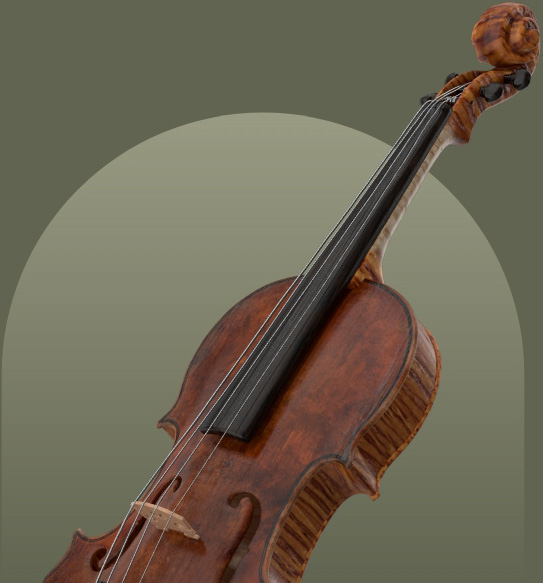
- Francesco Ruggieri detto il Per
Cremona, 1673John Dilworth
Influence and legacy
- Training and Mentorship: Sources present conflicting information regarding Francesco Rugeri's training. While he was traditionally assumed to have been a pupil of Amati, archival and stylistic research mentioned in The Brompton’s Book of Violin & Bow Makers suggests his workshop developed separately, with less direct contact than previously thought. This source also posits a stronger case that he might have been the first teacher of Stradivari himself. However, Karel Jalovec, Willibald Leo Lütgendorff, Henri Poidras, George Hart, and Cecie Stainer all state he was a direct pupil of Niccolò Amati, whose model he recalled or imitated. Lancetti, as quoted by George Hart, remarked, 'Francesco Ruggeri was a pupil of Niccolo Amati, and perhaps a more exact imitator of his instruments than G. B. Ruggeri; and made several instruments beautifully finished, and which are not easily distinguished from those of his master.'
- Schools/Tradition: His work is firmly considered to belong to the Cremonese school of violin making.
- Famous Owners: Count Cozio possessed a fine violin by Francesco dated 1684, and the Marquis Castiglioni also owned one made in the same year. Willibald Leo Lütgendorff notes that the label of the violin bought by Ole Bull (identified as Schlosser's from 1665) calls him 'Francisco Ruger'.
- Modern Recognition: His cellos are considered exceptionally important and are among the finest available, enjoying great favor among musicians and collectors. His instruments, which can be easily mistaken for those of Niccolò Amati due to their quality and style, deservedly fetch very high prices.
Biographies
The overview above is drawn from the following published accounts. Read them in the original:
John Dilworth+
RUGERI (RUGGIERI), Francesco Born 1620, died 1698 Cremona Italy. Known as ‘Il Per’ on his labels. Previously assumed to have been a pupil of Amati but archival and stylistic research suggests otherwise. His workshop developed separately from Amati, and certain features – his use of maple rather than poplar purfling, and the lack of the central back pin observed in the work of all other makers of the Amati school – suggest less direct contact than was previously thought. There is a stronger case to be made that he was himself the first teacher of Stradivari. A prolific maker, nonetheless his own dated labels only appear after c.1670, and it may well be that earlier work had been sold unlabelled, or falsely labelled as the work of Amati. In 1685 a violinist in Modena made a formal complaint that the violin he had bought for 12 pistoles as made by Amati turned out to be a Rugeri worth only three pistoles. His work is very fine, and indeed easily mistaken for that of Nicolò Amati. Only the slightly more slender soundholes, with small circular finials, and the distinctive head make obvious distinctions. The undercut of the scroll remains very flat around the first turn, but becomes very deep at the eye, while the whole volute has a slight ovality along its horizontal axis. Arching of a medium height, slightly pinched, with very fine golden-brown varnish. Materials can be very variable. His cellos are very important. He was amongst the very first Cremonese or Italian makers to explore the smaller 29” (74cm) model, and made a considerable number of extremely fine instruments; full-arched, often with plain willow backs, but some of extremely handsome maple. These instruments help compensate for the rarity of genuine Amati cellos. Francesco Ruggieri detto il Per / Cremona, 1673 [Chiesa]
Cecie Stainer+
Was the first of a family of makers in Cremona, very often confused with Rogeri of Brescia. He worked in Cremona at 7, Contrada Coltellai, from about 1645 to 1700. He was one of the celebrated pupils of Nicola Amati, whose pattern he copied, slightly enlarging it, and arching it more. The outline is very graceful, the sound-holes beautifully cut, rather short and open ; the purfling broad ; the varnish varies from a deep orange to a brilliant yellow-orange colour, it is very light and transparent; the wood is generally maple, of tine quality, often beautifully figured ; he sometimes used poplar for the backs of his violoncellos, but always obtained a sonorous and penetrating tone. The violoncellos are often made on too large a pattern ; he made a comparatively small number of violins and violas, but some are exceptionally good, the work beautifully finished, the wood and varnish leaving nothing to be desired ; they greatly resemble the work of Amati and are often sold as such. His instruments deservedly fetch very high prices. Labels: ” Francesco Rugier (or Ruger) detto il Per in Cremona, 1686 ” ; similar ones are dated 1645, 1665, and 1697. Rugier or Ruger is the Cremona patois rendering of Ruggeri; the word ” Per” is similarly the equivalent of” Pero.” ” Francesco Ruggeri detto il Per Cremona, 1671.” Three violins are known dated 1684.
George Hart+
Surnamed “II Per.” * The family of Ruggeri long occupied a foremost Place in the City of Cremona as makers of Violins, Violas, and Violoncellos. Their position could have been but little if at all inferior to that of the Amati family. Francesco, in his earliest works, gives evidence of exceptional artistic feeling, and the sequel of his career, as evidenced by his productions, is a genuine development of the first impulse of his genius. His work belongs to the school of Amati, but though the list of instruments which he has bequeathed to us be a long one, there is no sign of his ever having been a mere copyist. He evidently thought for himself. His sound-hole is a beautiful piece of workmanship, and may be said to come between that of Niccolo Amati and Stradivari, being of the most delicate execution. The outline of his work is very graceful and the arching admirable. The scroll has quite an equal merit with the body. He was very successful in selecting his material, much of which is handsome. His varnish, thoroughly Cremonese in character, and of a most beautiful hue, may be equalled, but never surpassed. This maker also knew how to use his varnish. There is no instance in which it has been laid on in clumsy patches ; the surface is always true and even, and, in consequence, the brilliancy of its appearance is perfect. Lancetti remarks, ” Francesco Ruggeri was a pupil of Niccolo Amati, and perhaps a more exact imitator of his instruments than G. B. Ruggeri; and made several instruments beautifully finished, and which are not easily distinguished from those of his master.” Count Cozio possessed a fine Violin by Francesco, dated 1684, and the Marquis Castiglioni also possessed one made in the same year. Francesco Ruggeri died at the house No. 7, Contrada Coltellai, Cremona. * I am informed “II Per” was unquestionably a nickname, and may have been given to an older member of the family on account of a peculiarity in introducing the word per in conversation, as we introduce ” because,” ” certainly,” &c.
Willibald Leo Lütgendorff+
Der älteste und bedeutendste Geigenmacher der Familie. Er wohnte in der Contrada Coltellai No. 7 und war ein Schüler Nicola Amati’s, den er nachahmte. Nur seine F-Löcher sind kürzer und weiter. Die Wölbung etwas höher und das Modell ein wenig breiter; die Umrisse sind schwungvoll, die Einlage breit, und der Lack, der leuchtend und durchsichtig wirkt, ist meist von dunkelgelbrother oder hellgelbrother Farbe. Das Holz ist gewöhnlich sehr schön und oft auch schon geflammt. Häufiger als seine Violinen kommen Violoncelli von ihm vor, deren Modell allerdings ein wenig zu lang erscheint; auch verwendete er bei diesen manchmal zu Zargen und Boden geringere Holzarten, immer aber verstand er, einen edlen vollen und schönen Ton zu erzielen. Ein echtes Violoncello von ihm ist heute kaum unter 6000—8000 M. zu haben. Auf dem Zettel der von Ole Bull gekauften Geige Schlosser’s (aus dem Jahre 1665) nennt er sich Francisco Ruger, und auch auf späteren Zetteln kehrt die Schreibweise des Namens wieder, ebenso auch: Rugièr, Ruggieri und Ruggeri.
Henri Poidras+
Pupil of Niccolo Amati whose model he recalls. He did not however follow it, his work being very individual. The outline and scroll are of fine design: the sound holes are rather small and slightly open. A beautiful and very transparent pale red or orange varnish adorns this fine make, the woods being particularly selected for the violins. This is not so in the case of his ‘cellos, but the fact that they were more numerous, probably explains this lack of finish. It is not exactly known why he was familiaily known as ” II Per”.
Karel Jalovec+
Cremona. 1645—1700. The oldest and best violin maker of the family (Not to be mistaken for the Rogeri family). He was a pupil of Nicolo Amati. He selected fine wood, but made the backs of the ‘cellos (on which he specialized) often of maple-wood. The pattern is long, rather broad, of beautiful shape, pleasing to the eye; the arching is somewhat higher, the scrolls bigger than those designed by his teacher. Faultlessly modelled instruments; sound-holes rather short, tastefully cut; broad, yet hand-some purfling; typical long middle bouts. He applied a lustrous brilliant and transparent varnish deep red, dark-yellow-red, bright-yellow-red or orange. The ‘cellos, which are more powerful in tone than his violins (the latter are more mellow than strong), belong to the best in general and are in great favour. He built more ‘cellos than violins and violas. Price 150 — 200.000 Kc. and more. Francesco Ruggieri was the father of Giacinto (1666-1698) and Vincenzo (1690—1735). Antonio, who worked in Cremona ca 1723, was a son of Giacinto Ruggieri.
Sell your instrument with Amati
Get started by uploading photos of your instrument for our experts to review.
Sell your instrument with Amati
Get started by uploading photos of your instrument for our experts to review.
Pupils
Giacinto Rugeri Pupil
Giovanni Battista Rugeri Pupil
Family
Working in Cremona at the same time
Aegidius Barzellini worked 1670–1720
Andrea Guarneri 1623–1698
Antonio Stradivari 1644–1737
Carlo Rugeri 1666–1713
Giacinto Rugeri 1661–1697
Giacomo Gennaro 1627–1701
Giovanni Battista Rogeri 1642–1705
Girolamo (Hieronymus) (II) Amati 1649–1740