
Vienna School
Sebastian Dallinger
Vienna, 1735–1809
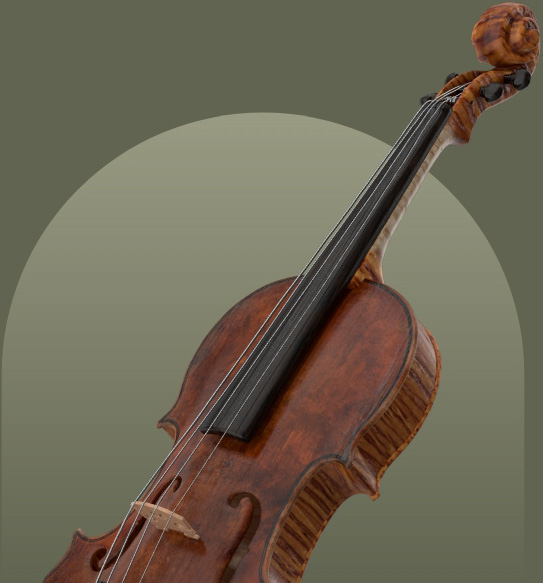
Sebastian Dallinger (1735-1809) was a highly regarded lute and violin maker active in Vienna, Austria. Born in 1735 and dying in 1809, he became a citizen in 1768 and resided in the Kärnthner Viertel. His instruments, particularly his violoncellos, are noted for their refined finish and careful craftsmanship, often following the Stainer model with a high arch. While sources contain conflicting information regarding his varnish color, it was generally described as clear yellow or dark brown. He used printed labels and sometimes branded his instruments.
Auction price history
Highest auction price
| Type | Details | Sold | Price |
|---|---|---|---|
| Violin | Labelled Sebastian Dalinger, Viennae Anno 1798 | March 2025 | £11,400 |
| Violin | Labelled Sebastian Dalinger fecit Vienna anno 1780 | December 2024 | £18,087 |
| Viola | Labelled Sebastian Dalinger, Viennae Anno 1796 | March 2024 | £9,600 |
| Violin | 35.7 cm Vienna, 1786 | May 2009 | £4,658 |
| Violin | 35.7 cm Vienna, 1786 | February 2007 | £4,200 |
| Violin | Venice, 1786 c. | October 2005 | £1,018 |
| Violin | 1805 | July 2003 | £2,937 |
| Violin | 1790 | June 2001 | £920 |
| Violin | 1782 | June 1989 | £2,860 |
| Violin | 1771 | June 1988 | £3,080 |
| Violin | 1783 | November 1987 | £2,200 |
| Violin | 1782 | April 1982 | £1,430 |
Maker Overview
Life
Sebastian Dallinger (1735-1809) was born in 1735 and died in 1809 in Vienna, Austria. He took the citizen's oath on January 23, 1768, and resided in the Kärnthner Viertel, Himmelpfortgasse. His name appears in tax books until 1787. Willibald Leo Lütgendorff notes that Dallinger was a very capable lute and violin maker, on par with Thir. Sources indicate that his name was consistently written as Dalinger by himself, though official documents sometimes recorded it as Tallinger or Dallinger.
Characteristics
- Model
- Dallinger's work often followed the Stainer model, characterized by a high arch and a deep edge flute. Later instruments, however, were less extreme in their arching.
- Workmanship
- His instruments exhibit very refined finish and careful craftsmanship. The outline, arching, and F-holes show beautiful curves, reminiscent of the Stainer model.
- Wood
- The wood used was generally good, though not always exceptionally beautiful.
- Scrolls
- Scrolls were finely carved, sometimes featuring a Stainer-like lion's head.
- Varnish
- , the varnish was often a little thin and not enhanced by a dull ground, usually appearing clear yellow. Some degraded examples have turned dark brown, while others show a quite substantial red-brown coat. Willibald Leo Lütgendorff, however, states that the varnish was usually dark brown and lacked brilliance, though sometimes it was yellow. For instance, Korecky in Prague possesses a violoncello from 1803 by Dallinger with yellowish varnish.
- Instruments
- His violoncellos are particularly sought after. The Schottenstift in Vienna owns a violoncello by him from 1771.
- Labels and Brands
- At least one example of his work features a large brand on the upper back that reads: 'Sebastian Dallinger Vienna 1783'. Printed labels include: 'Sebastian Dalinger / Lauten und Geigenmacher / in Wien. 1783.', 'Sebastian Dalinger / Viennae. anno 1806', and 'Sebastian Dalinger / fecit Vien- / nae. Anno 1768'.
- Sebastian Dalinger
Lauten und Geigenmacher
in Wien. 1783John Dilworth - Sebastian Dalinger
Viennae. anno 1806John Dilworth - Sebastian Dalinger
fecit Vien-
nae. Anno 1768John Dilworth
Influence and legacy
- Mentorship/Tradition: Sebastian Dallinger's work is noted for being on a par with that of Thir, indicating a shared high standard of Viennese lutherie.
- Model Influence: His instruments frequently adopted the Stainer model, influencing their characteristic high arch and F-hole design.
- Notable Instruments: His violoncellos are highly regarded and sought after.
- Collections: A violoncello made by Dallinger in 1771 is part of the collection at the Schottenstift in Vienna. Korecky in Prague also owns a violoncello from 1803 by him.
Biographies
The overview above is drawn from the following published accounts. Read them in the original:
John Dilworth+
DALLINGER (DALINGER), Sebastien Born 1735, died 1809 Vienna Austria Very good work on the Stainer model with high arch and deep edge flute. Later instruments less extreme. Very refined finish. Finely carved scroll (sometimes replaced with a Stainer-like lion’s head). Varnish a little thin and not helped by a dull ground. Usually clear yellow, some degraded examples have turned dark brown, others with quite substantial red-brown coat. At least one example with large brand on upper back: ‘Sebastian Dallinger Vienna 1783’. Printed label: Sebastian Dalinger / Lauten und Geigenmacher / in Wien. 1783. Sebastian Dalinger / Viennae. anno 1806 Sebastian Dalinger / fecit Vien- / nae. Anno 1768
Willibald Leo Lütgendorff+
Er wohnte im Kärnthner Viertel, Himmelpfortgasse, und legte am 23. Januar
1768 den Bürgereid ab. In den Steuerbüchern kommt er bis 1787 vor. Er war
ein mit Thir auf gleicher Stufe stehender, sehr tüchtiger Lauten- und Geigenmacher,
von dem namentlich die Violoncelli sehr gesucht sind. Ein solches von
1771 besitzt das Schottenstift in Wien. Er schrieb seinen Namen stets Dalinger, in den
Acten liest man dagegen: Tallinger, Tallinger und Dallinger. — Das Holz ist gut, wenn
auch nicht ausgesucht schön, die Arbeit sorgfältig. Umrisslinien, Wölbung und F-Löcher von schönem Schwung und an das Stainermodell erinnernd. Der Lack ist gewöhnlich dunkelbraun und ohne Feuer, manchmal aber auch gelb; so besitzt Korecky in Prag ein Violoncello von ihm aus dem Jahre 1803 mit gelblichem Lack.
Sell your instrument with Amati
Get started by uploading photos of your instrument for our experts to review.
Sell your instrument with Amati
Get started by uploading photos of your instrument for our experts to review.
Working in Vienna at the same time
(Bartl) Andreas Nicolaus (I) Partl 1682–1762
Andreas Carl Leeb worked 1790–1801
Andreas Ferdinand Mayr worked 1720–1764
Andreas Nicolaus Bartl 1682–1762
Anton Kulhawy worked 1804–1830
Christian Franz Bartl 1737–1807
Christian Franz Partl 1737–1807
Christoph Nicolaus Leidolff worked 1774–1788