
Vienna School
Michael Andreas Partl
Vienna, 1704–1788
Michael Andreas Partl (1704-1788) was a diligent Viennese lutenist and viol maker as the best maker of his family. He was the son and pupil of either Andreas Partl or Andre Nikolaus P., depending on the source. Despite his skill, he did not achieve wealth, with records indicating poverty in his later years before his son Josef took over the workshop in 1779. His instruments, characterized by good materials and rich varnish, include violas and lutes, many of which are preserved in prominent European collections.
Maker Overview
Life
Michael Andreas Partl (1704-1788) was born in 1704 and died in 1788 in The Brompton's Book of Violin & Bow Makers.'s Die Geigen- und Lautenmacher vom Mittelalter bis zur Gegenwart, he was the son and pupil of Andre Nikolaus P., though Dilworth identifies his father as Andreas Partl. Michael Andreas Partl resided in the Wübmer Viertel, like his father, and took the citizen's oath on May 29, 1728. Lütgendorff notes that he was a very diligent craftsman and among the better Viennese lutenists, though he did not achieve prosperity. He appeared in tax records from 1749 to 1775, but from 1776 to 1779, it was recorded that he was "Bettlarm und wird von seinem Weib unterhalten" (poverty-stricken and supported by his wife). His son, Josef, took over the workshop in 1779.
Characteristics
- Workmanship
- John Dilworth describes Michael Andreas Partl as the best maker of his family, noting his instruments featured a medium high arch, good materials, and a rich golden-yellow varnish. Willibald Leo Lütgendorff, while acknowledging his skill, observed that his later works were often quite ordinary, yet always showed a skilled hand.
- Instruments
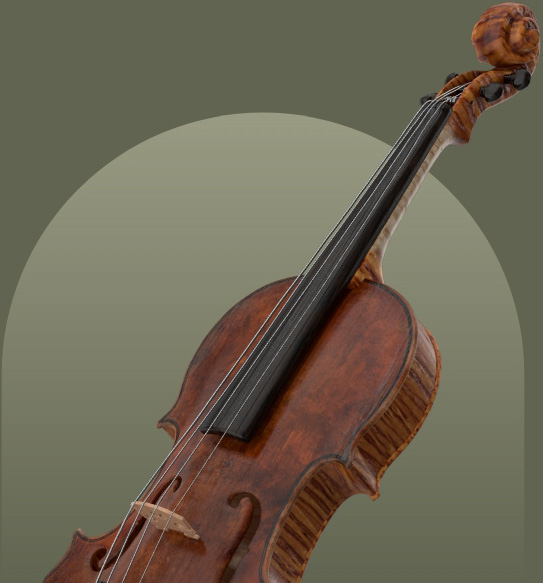
- He made lutes and viols. Lütgendorff mentions several surviving works, including an undated viola in the Schottenstift in Vienna, a viola with a carved female head on the pegbox from 1746 in Leipzig (Sammlung De Wit), and a similar viola from 1764 in the Museum of the Conservatorium in Brussels (No. 224). A beautiful viola d'amore from 1732, featuring openwork carving on the pegbox and a blindfolded Cupid's head, is part of the Royal Collection of Old Musical Instruments in Berlin (No. 866). A lute from 1745 is housed in the Musikhistorisches Museum in Stockholm.
- Michael Andreas Partl
fecit Viennae 1746John Dilworth
Influence and legacy
- Mentorship: Sources contain conflicting information about his father's name; John Dilworth states he was the son and pupil of Andreas Partl, while Willibald Leo Lütgendorff identifies him as the son and pupil of Andre Nikolaus P.
- Continuity: His son, Josef, assumed control of Michael Andreas Partl's workshop in 1779.
- Collections: Instruments by Michael Andreas Partl are preserved in significant collections, including the Schottenstift in Vienna, the Sammlung De Wit in Leipzig, the Museum of the Conservatorium in Brussels, the Royal Collection of Old Musical Instruments in Berlin, and the Musikhistorisches Museum in Stockholm.
Biographies
The overview above is drawn from the following published accounts. Read them in the original:
John Dilworth+
Michael Andreas Born 1704, died 1788. Son and pupil of Andreas Partl, above. Best maker of the family. Medium high arch with good materials and rich golden-yellow varnish. Also made lutes and viols. Michael Andreas Partl / fecit Viennae 1746
Willibald Leo Lütgendorff+
Sohn und Schüler von Andre Nikolaus P. Er wohnte wie sein Vater im
Wübmer Viertel und legte am 29. Mai 1728 den Bürgereid ab. Er war sehr
fleissig und gehörte zu den besseren Wiener Lautenmachern, hat es aber zu
keinem Wohlstand gebracht. In den Steuerbüchern kommt er von 1749—1775
vor; von 1776—1779 aber heisst es von ihm: »Bettlarm und wird von seinem
Weib unterhalten.« Im Jahre 1779 übernahm sein Sohn Josef die Werkstatt.
Werke von Midi. Andre P. sind in grösserer Zahl erhalten, so eine undatirte
Viola im Schottenstift in Wien, eine Viola mit geschnitztem Frauenköpfchen
am Wirbelkasten von 1746 in Leipzig (Sammlung De Wit), eine ähnliche von
1764 im Museum des Conservatoriums in Brüssel (No. 224) und eine schöne
Viola d’ amore von 1732 in der kgl. Sammlung alter Musikinstrumente in Berlin
(No. 866); der Wirbelkasten zeigt durchbrochene Schnitzerei und das Köpfchen
des Liebesgottes mit verbundenen Augen. Im Musikhistorischen Museum in
Stockholm ist eine Laute von 1745. Wenn seine späteren Arbeiten auch oft
recht gewöhnlich sind, so erkennt man doch immer eine geschickte Hand darin.
Sell your instrument with Amati
Get started by uploading photos of your instrument for our experts to review.
Sell your instrument with Amati
Get started by uploading photos of your instrument for our experts to review.
Family
Working in Vienna at the same time
(Bartl) Andreas Nicolaus (I) Partl 1682–1762
(Bosch) Anton Posch 1677–1742
Andreas Ferdinand Mayr worked 1720–1764
Andreas Nicolaus Bartl 1682–1762
Anton Stefan Posch 1701–1749
Christian Franz Bartl 1737–1807
Christian Franz Partl 1737–1807
Christoph Nicolaus Leidolff worked 1774–1788